Exploring the Economic Complexity of the Western Roman Empire
Discover the economic complexity of the Western Roman Empire and its influence on modern economies. Insights from Société Flash on historical dynamics.
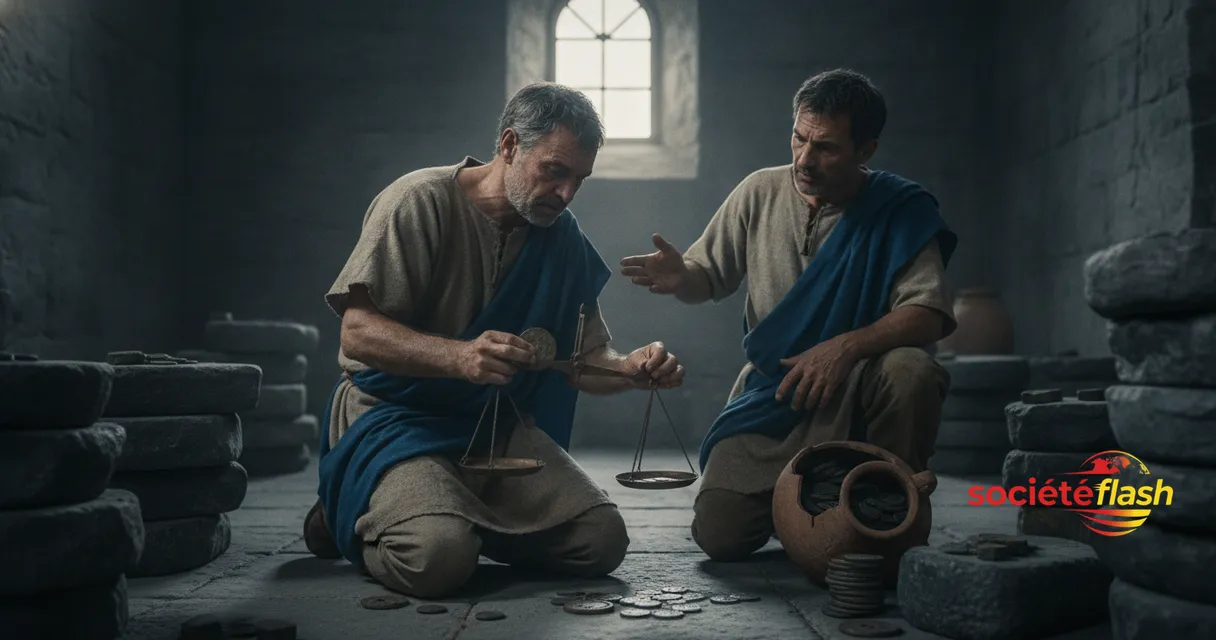
The economic complexity of the Western Roman Empire is a captivating subject that continues to intrigue historians and scholars worldwide. Analyzing this complexity provides valuable insights into ancient economic dynamics and their influence on modern structures. At Société Flash, we explore how recent discoveries enhance our understanding of this key historical aspect and how these findings can be applied to current economic challenges.
Understanding the Economic Complexity of the Western Roman Empire
Economic complexity is a concept that assesses the diversity and sophistication of a region's economic activities. For the Roman Empire, this complexity has been examined through a unique dataset called LIST (Latin Inscriptions in Space and Time), which compiles Latin inscriptions from the era. These inscriptions shed light on the professions and economic activities that existed, offering valuable clues about how these activities were distributed across the Empire.
A central element of this study is the use of the Economic Complexity Index (ECI), calculated from the inscription data. The ECI reveals the diversity of occupations in various provinces, with Latium (Rome) standing out due to its economic variety.
Addressing Biases for Accurate Insights
Analyzing these inscriptions requires accounting for several potential biases. A significant bias is the focus on honorable occupations, often overlooking more common professions like agriculture. Furthermore, the majority of these inscriptions pertain to men, highlighting a gender imbalance in representation.
Researchers such as Petra Heřmánková and Matteo Mazzamurro have developed methods to correct these biases, providing a more accurate picture of the economic realities of the time. These efforts are crucial to ensure that our modern interpretations of ancient economic dynamics are not skewed by historical prejudices.
Comparisons with Modern Economies
It is fascinating to observe that the economic complexity of the Roman Empire shows significant correlations with modern economic complexity indices. This finding suggests that ancient economic dynamics may have long-lasting effects on current economic structures. For instance, the territories of the Western Roman Empire today encompass about 23 modern countries, allowing for comparisons between ancient and modern ECI indices.
- Latium (Rome) possessed the highest ECI during the Roman era.
- The diversity of occupations was concentrated in certain provinces, reflecting local economic complexity.
- These historical indices show a correlation with contemporary economic data, which is remarkable after so many centuries.
This correlation raises intriguing questions about the persistence of economic complexity over time. Although researchers have yet to establish the causality of this phenomenon, it remains a subject of ongoing fascination and study.
Implications for Future Research
The research on the economic complexity of the Western Roman Empire paves the way for numerous other studies. A current challenge is integrating Greek inscriptions from the Eastern Roman Empire, which are less understood due to linguistic differences and digitization issues. Enhancing these Greek data could enrich our understanding of the entire Roman Empire.
For researchers and historians, these discoveries underscore the importance of correcting biases in historical data to gain a clear and useful view of past societies. These efforts are essential to effectively apply this knowledge to our contemporary economic challenges.
FAQ
What is the Economic Complexity Index (ECI)?
The Economic Complexity Index (ECI) measures the diversity and complexity of a region's economic activities. It is used to understand both ancient and modern economic dynamics.
What are the main biases in analyzing Roman inscriptions?
The main biases include the overrepresentation of honorable occupations, gender imbalance in inscriptions, and lack of data on common professions like agriculture.
Why is the economic complexity of the Roman Empire significant today?
It illustrates how ancient economic dynamics can have lasting impacts, influencing modern economic structures and offering lessons for current challenges.
How can these studies impact modern economic practices?
By understanding past economic models, we can better anticipate and address current economic complexities, adapting lessons learned to today's contexts.
What is Société Flash's role in this analysis?
At Société Flash, we are committed to providing relevant and up-to-date insights on complex topics like this. Our articles, such as a new Tolkien novel in France, aim to enrich our readers' understanding.
Conclusion
The economic complexity of the Western Roman Empire offers not only a glimpse into the past but also tools to understand and navigate modern economic challenges. To learn more about these fascinating subjects, feel free to contact us or visit our website to discover more captivating articles.
Also Read